Full report
A new vehicle usually gives the window tint industry something to talk about. Owners want to know how it will look, what the glass feels like in the sun and who can work on it.
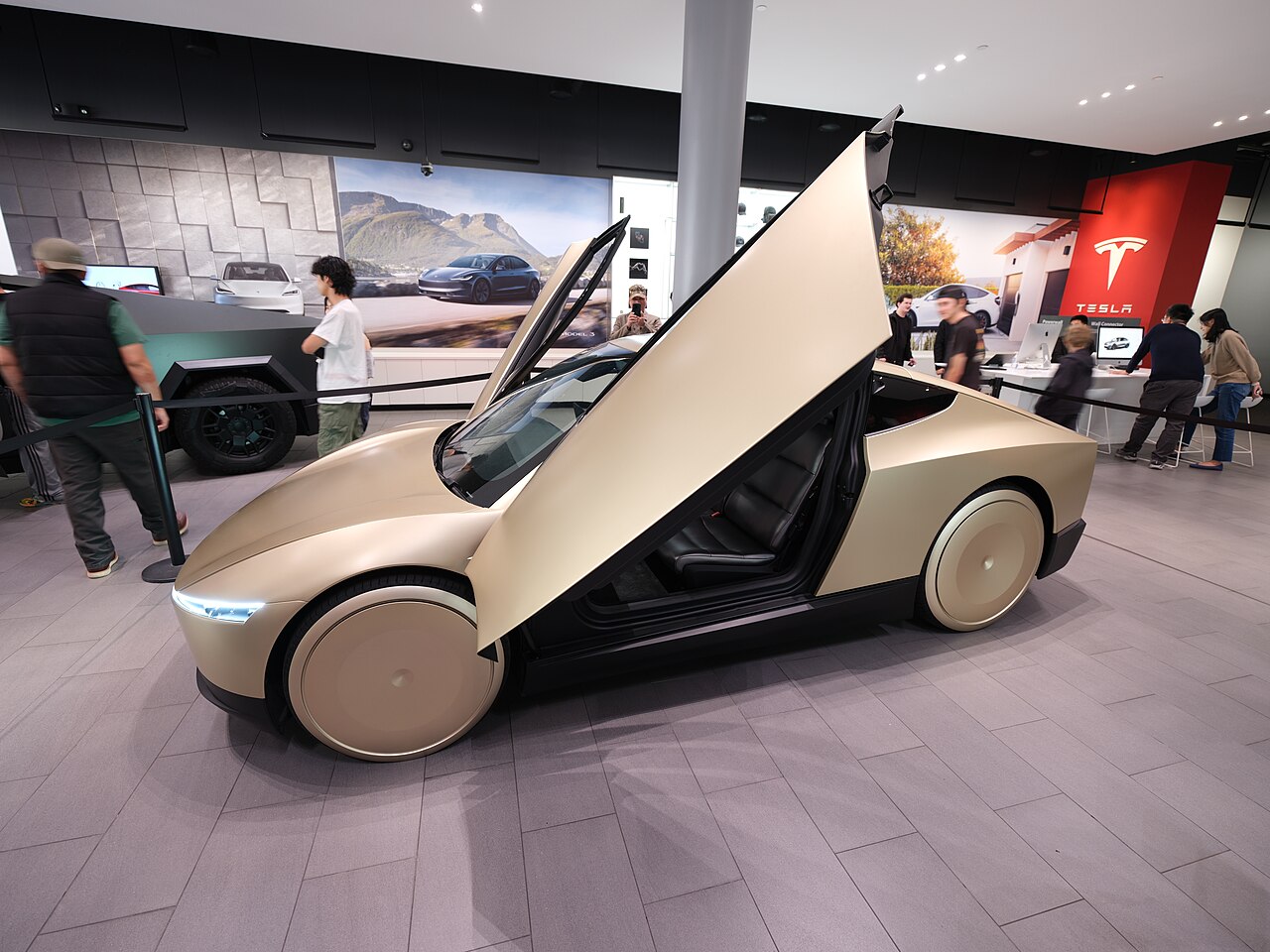
Cybercab adds a bigger question: what happens to the window tint industry if more vehicles arrive with restrictions on aftermarket work?
Tesla’s published Cybercab agreement restricts modifications including tint, while allowing work through Tesla or a Tesla-authorized provider, subject to applicable law. A public Cybercab-specific tint offering was not verified in the sources reviewed for this article.
If vehicles with this kind of restriction become common, the industry could face more than a different route to the same job. Some work might become unavailable to independent shops, some needs might be met at the factory, and some businesses might have to find other permitted applications. The question is what that could mean for the industry, not simply who gets an unchanged pool of tint appointments.
This is analysis of possible outcomes. It is not a forecast that Cybercab will replace conventional cars or that other manufacturers will adopt Tesla’s current terms.
More vehicles would not automatically mean more accessible jobs
Picture an owner who wants less glare or more privacy. The interest is real, but an independent shop still needs a permitted way to provide the work.
If the owner’s vehicle has a controlled modification process, demand may exist without being available to every installer. A shop could receive questions about a model while being unable to advertise an installation under that vehicle’s terms.
For a business owner, that changes what a useful market signal looks like. An increase in searches would show interest. It would not, on its own, prove a new source of installable jobs.
The opportunity would depend on the permissions, products, participating providers and customer purchase process. Those details deserve at least as much attention as delivery announcements.
The customer could start in the vehicle manufacturer’s app
There is already a real example of a different route to a tint purchase.
Tesla’s XPEL support page describes ordering film through the Tesla app and choosing a certified installer. Its product page says not every XPEL location participates and that Tesla and XPEL both receive proceeds from the purchase.
That general program does not establish Cybercab eligibility. It does show that the vehicle company can be part of the customer’s tint purchase before the installer enters the conversation.
If a comparable channel were offered for Cybercab, it could create work for participating businesses while limiting which businesses receive those customers. The owner might begin with an option in an app instead of searching for nearby shops and calling several of them.
For installers, the practical questions would include who qualifies, who sets the offering, who communicates with the customer and what the commercial terms are. None of those answers should be invented for a Cybercab program that has not been established.
Passenger comfort could still matter even if the sales channel changes
A vehicle that drives itself still carries people. Those people can care about direct sunlight, a bright phone screen, privacy at a curb or whether they enjoy the view outside.
It is reasonable to explore how a cabin built around passengers might address those preferences. It is not reasonable to assume every preference becomes an aftermarket film sale.
A manufacturer could address part of the experience through its original glazing. A supported accessory might address another part. An operator could choose a standard configuration for all vehicles it controls.
Those approaches would place the purchasing decision in different hands. The film industry might have a role as a supplier, a participating installer or a service provider, but the role would depend on the actual vehicle program.
WindowFilm.org examines the technical side of that distinction in who gets to provide Cybercab comfort.
A fleet buyer would ask different questions from an individual owner
An individual owner may want a particular look. A commercial operator, if it has authority to make the purchase and modification, could place more weight on consistent results, repairability and time out of service.
That could change the sales conversation. Instead of helping many owners choose their favorite shade, an installer might need to satisfy one buyer’s specification across multiple vehicles.
The arrangement could bring repeatable work. It could also concentrate decision-making and purchasing power in fewer customers. Neither outcome should be translated into a promised fleet contract or assumed profit margin.
Cybercab’s personal-use agreement also does not give every buyer permission to operate a taxi business. Commercial use requires the applicable authorization. Any fleet scenario discussed here concerns a separately permitted operating arrangement, not an automatic right attached to a private purchase.
Factory choices could change the aftermarket question
If a vehicle arrives with more of the comfort or privacy features passengers want, the question for an aftermarket company becomes what useful, permitted need remains.
That does not prove there will be no need. It means the case has to be based on the actual car and its available options. A manufacturer’s claim, a laboratory film rating and a measured result inside a finished vehicle are different pieces of evidence.
The same applies to electrically changing windows. They make an interesting subject for future design, but a demonstration of a technology elsewhere is not a Cybercab product announcement.
Our blackout-window analysis asks how passenger control might fit a driverless cabin while keeping the current permissions separate.
Three outcomes worth watching
One possibility is that access remains narrow. Cybercab-related interest could grow while independent shops outside a permitted channel have little opportunity to perform the work.
A second possibility is a clearly defined partner offering. That could provide an opportunity for eligible businesses, with its value depending on the scope and terms of participation.
A third possibility is that more of the desired performance is supplied as part of the original vehicle or through centrally purchased services. That could shift some spending toward manufacturers and selected suppliers rather than ordinary retail appointments.
These possibilities could coexist across different vehicles and markets. They are not stages that every business must pass through, and no one should assume all autonomous manufacturers will choose the same model.
What a tint business can usefully do now
The immediate response is to understand the published rule well enough to explain it accurately.
A business can answer questions about Cybercab without advertising a service it cannot verify. It can also pay attention to real program announcements, provider qualifications and documented vehicle requirements.
An approved opportunity, if one becomes available to that business, can then be evaluated on its actual economics and fit. There is little value in planning around imagined installation volume while the ability to accept the work remains unresolved.
At the same time, one new vehicle’s agreement is not a reason to declare the existing tint business obsolete. Current customers, different vehicle models and other permitted film applications need to be evaluated on their own merits.
The bigger question is what changes for the industry
Cybercab gives the tint industry a concrete reason to look beyond the number of vehicles that might be sold.
If a growing share of vehicles restricts aftermarket tint, how much work remains available? Which customer needs still call for film? How might shops and suppliers adapt if factory features or tightly controlled programs meet more of those needs?
There is no reliable industry-wide answer from one vehicle’s agreement. Restrictions could narrow opportunities in one part of the market without making the entire tint business disappear. Watching actual vehicle adoption, permitted services and customer demand will tell us more than assuming every new car becomes another tint job.
Dates, context & legal notes
Sources & reporting notes
- Tesla Cybercab Autonomy Subscription Agreement www.tesla.com
- Tesla XPEL window tint support www.tesla.com
- Tesla XPEL window tint product page shop.tesla.com
This article is an original, AI-assisted summary of the sources above. It does not claim firsthand reporting or independent product testing. Our editorial standards · Corrections policy