Full report
Analysis based on sources checked November 15, 2026 (UTC). Passenger-controlled blackout glazing is a future design question, not an announced Cybercab feature or current permission to modify one.
Before imagining a Cybercab with windows that turn opaque at the touch of a button, there is a present-day restriction to understand. Tesla's published agreement limits tint modifications to Tesla or a Tesla-authorized provider, subject to applicable law.
That leaves a larger question worth exploring: could a future autonomous vehicle be designed and approved with much darker passenger windows because nobody inside needs to see the road to drive?
The idea is easy to picture. A passenger presses a privacy button, the outside view disappears, and the cabin becomes a private space. Press it again and the view returns.
Whether that could become a lawful vehicle feature depends on more than removing the steering wheel. It also raises a question for the tint industry: if privacy becomes a built-in, software-controlled feature, who gets to provide it and who gets to change it?
A passenger's view and the car's view can be different things
In a conventional car, a clear view of the road serves an obvious purpose. The person controlling the car needs it.
An autonomous vehicle senses its surroundings through its driving system. Where that system does not depend on a particular passenger window, the human view and the machine view may serve different purposes.
For the passenger, the window can provide daylight, scenery, orientation and a sense of connection to the street. Some people may want more privacy. Others may feel uncomfortable without a view outside. A possible future design could give passengers a choice, but the value of that choice is a design argument, not evidence that the feature exists today.
The regulatory question is equally specific: which visibility requirements still serve a safety purpose for that vehicle and which could reasonably change?
Regulators have already considered a related question
A real decision makes this more than idle speculation. In July 2026, NHTSA granted a temporary exemption for a specific Zoox vehicle.
The relevant discussion concerned specific tests for how the windows resist wear and preserve a clear image. Zoox explained that its driving sensors looked outward from the vehicle's exterior, rather than through its windows. NHTSA accepted that the glazing at the vehicle's ends was not needed for driving visibility, while retaining conditions for occupant protection.
That was not an approval for blackout windows or zero light transmission. It was not a Cybercab exemption.
Its significance is the reasoning: regulators can examine what a particular window actually does. A requirement serving a human driver's view may warrant different treatment in a design that never relies on that view. The decision does not remove the need to address other safety functions.
For a future privacy feature, that distinction is a starting point for a manufacturer and regulators to examine. It is not permission an owner or tint shop can borrow from another vehicle.
Darker windows would still have to protect passengers
The federal glazing standard addresses more than driver visibility. Its purposes include reducing injuries from contact with glazing and the risk of occupants being thrown through windows in a collision.
Those concerns remain when the people inside are all passengers. A change to one visibility requirement would not automatically remove the others.
NHTSA's 2022 rule for vehicles with automated driving systems revised occupant-protection provisions for designs without traditional controls. It did not establish a general dark-tint exemption for autonomous passenger cars.
State rules add another part of the picture. Our Cybercab tint-law explainer examines those rules separately. A change to one federal requirement would not settle every state question or provide Tesla authorization.
Cybercab's cameras make the question more concrete
It would be a mistake to assume that every autonomous vehicle senses the world entirely from outside its glazing.
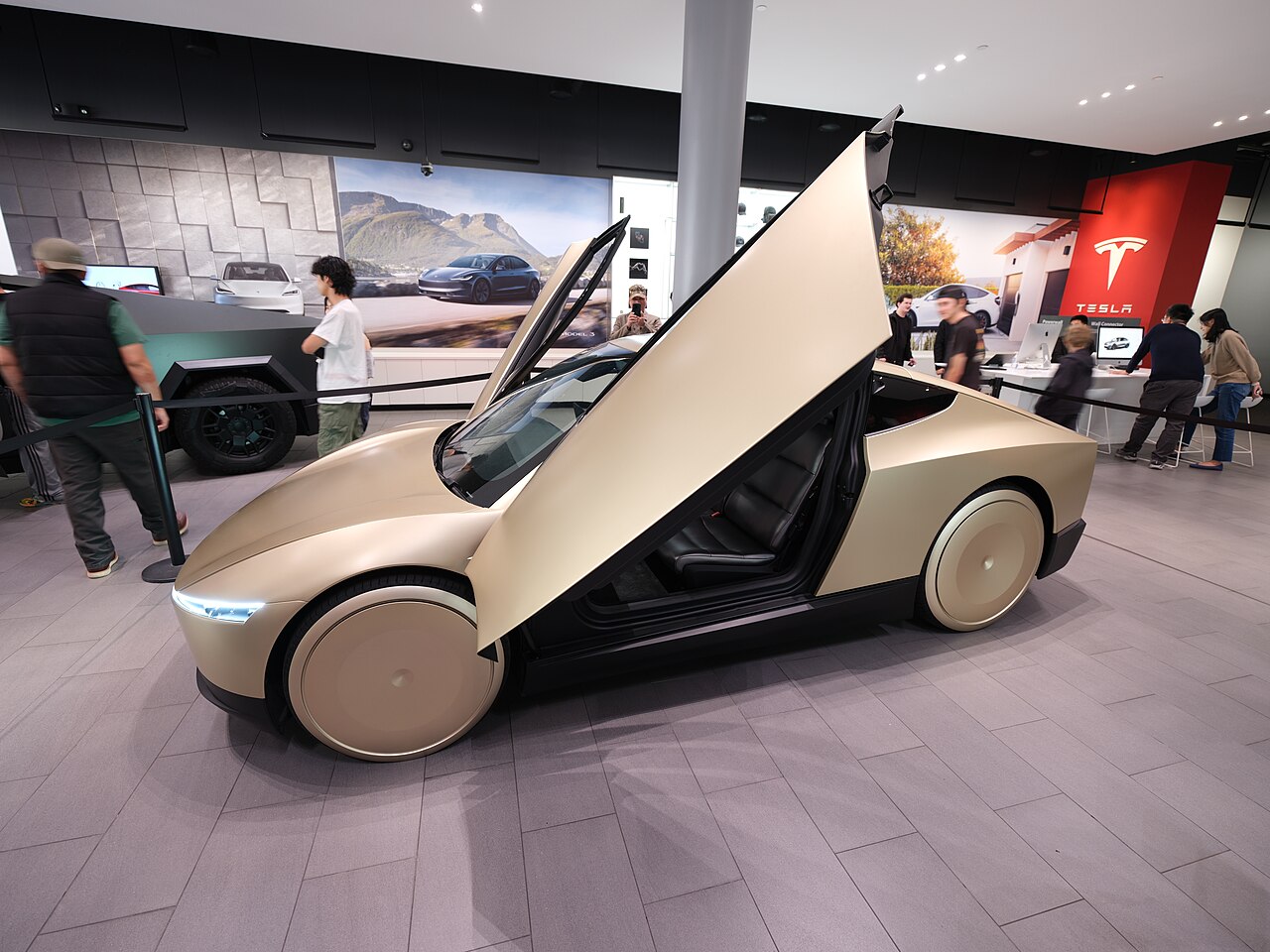
Tesla's Cybercab compliance guide identifies two cameras mounted to the windshield near the dome lights. A passenger may not need that view to drive, but the vehicle's camera system still needs its intended optical path.
A manufacturer exploring a privacy feature would therefore have to account for its actual camera arrangement. It might investigate separating areas used for sensing from areas used for passenger privacy. Whether a particular design could do that reliably would need evidence.
The concept is understandable: passengers might choose not to see outside while the vehicle continues to perceive its surroundings. Making that work is a vehicle-design task, not a conclusion that follows from applying a darker film.
“Electric tint” can describe very different effects
There is also a difference between a window becoming darker and a window becoming impossible to see through.
A Texas Instruments and Gauzy technical paper explains how polymer-dispersed liquid crystal, or PDLC, can scatter light to create a cloudy privacy effect. A view can disappear while light still passes through. That is different from making a cabin dark.
Gauzy's description of suspended particle device technology describes adjustable shading that preserves a view through the glass. Technologies grouped together as smart glass do not necessarily deliver the same kind of privacy.
That matters to the imagined feature. Does “blackout” mean no recognizable outside view, almost no visible light, or privacy from people looking in? Those are different goals, with different implications for the passengers and the vehicle.
The future question includes who controls the choice
If a manufacturer pursued such a feature, useful questions would include what happens if power fails, whether passengers can restore a clear view, and how the design supports safe exit and emergency response. These are questions to evaluate, not claims that one universal regulation already dictates every answer.
For the tint industry, another question is whether privacy would be supplied through factory glass, a manufacturer-approved accessory or some other authorized service. Tesla's current terms make provider authorization central to the Cybercab discussion. They do not establish which future approach Tesla will choose.
The current modification restrictions and current legal framework deserve to be understood on their own terms. A future change to vehicle design or regulation would need to be evaluated separately.
A car that drives itself gives us a reason to reconsider what passengers need from a window. Whether they will get more control over that window, or whether the manufacturer will retain that choice, remains an open and consequential question.
Dates, context & legal notes
Sources & reporting notes
- Tesla Cybercab Autonomy Subscription Agreement, version 20261112 www.tesla.com
- NHTSA: Zoox Grant of Temporary Exemption, July 31, 2026 www.govinfo.gov
- 49 CFR §571.205: Glazing materials www.ecfr.gov
- NHTSA 2022 ADS occupant-protection final rule www.govinfo.gov
- Texas Transportation Code §547.618 tcss.legis.texas.gov
- Tesla Cybercab Compliance and Supplemental Information Guide www.tesla.com
- Texas Instruments and Gauzy technical paper on automotive smart glass www.ti.com
- Gauzy: SPD Smart Glass www.gauzy.com
This article is an original, AI-assisted summary of the sources above. It does not claim firsthand reporting or independent product testing. Our editorial standards · Corrections policy